
10 Creative Website
Design Ideas To Help
When You’re Stuck
Matan Navesh on web design
Finding yourself out of ideas is undesirable for any web designer. There
are many reasons for it — repetitive work, overwork, and more.
To find new ideas, you need new approaches. Discover where
and how to find new web design ideas.

Table Of Content
There are many reasons why you might feel stuck on a project. Perhaps your recent client is exceptionally vague about what they want and you’ve got no idea where to start. Or, perhaps, you feel burned out and uninspired after having worked non-stop for a long period of time. Or, maybe, you’ve been designing websites for the same type of clients with no opportunity to exercise your creative muscles.
Whatever the reason is, feeling stuck is quite common when it’s your job to be creative. But, as long as you have a process to help you generate new web design ideas, you’ll be able to chip away at the roadblocks in front of you.
In this article, we’re going to look at 10 things you can do to give your creativity a boost along with some resources you can bookmark for the next time you need it.
Discover the Best Sources for Web Design Inspiration
Table Of Contents
10 Actionable Web Design Ideas
- 1. Put Together a Step-by-Step Process
- 2. Reacquaint Yourself With the Principles of Web Design
- 3. Research the Most Recent Design Trends
- 4. Zero In on One Tiny Element
- 5. Switch From Desktop to Mobile
- 6. Experiment With Extremes
- 7. Work on a Website in a Different Niche
- 8. Take a Course or Read a Tutorial
- 9. Look at Other Creative Works
- 10. Go for a Walk
10 Actionable Web Design Ideas
When you’re feeling unmotivated, uninspired, or just plain stuck, here’s what you can do to get those fresh web design ideas flowing again:
1. Put Together a Step-by-Step Process
- Working without a process can be extremely detrimental to a web designer’s flow — especially when you’re in the weeds, feeling overwhelmed and struggling to come up with something new.
- Rather than force your brain to work in overdrive all the time, create a step-by-step process that removes this unnecessary clutter from your brain
- Better yet, create your plan and templatize it in your task management software so you can repurpose it for all your jobs.
- Trello, for example, is a free platform that makes documenting and organizing website projects super easy:
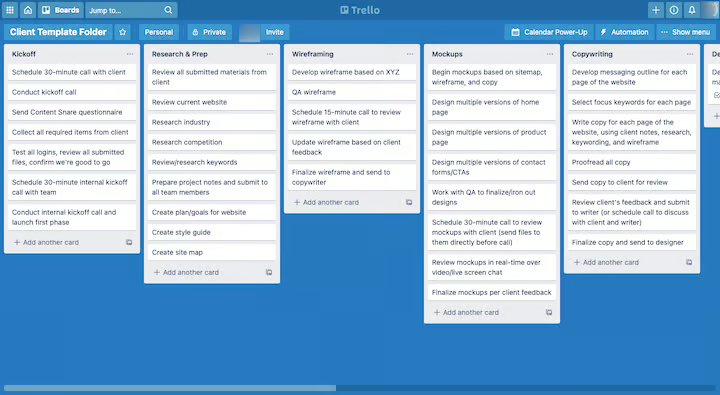
By laying out the details for each job into a framework like this, you’ll free your brain from having to worry about or recall them. This should give you some space to start thinking creatively again.
2. Reacquaint Yourself With the Principles of Web Desig
- When you’re trying to come up with creative web design ideas, it’s easy to get hung up on their newness. But no one ever said that in order for a website to be good it needs to be completely new.
- In fact, there’s a web design principle that deals with this subject. Jakob’s Law explains that: “Users spend most of their time on other sites. This means that users prefer your site to work the same way as all the other sites they already know.
f you find yourself obsessing over the newness or experimental nature of a website you’re working on, it’s a good idea to stop what you’re doing and go review the basics of good UX. By taking it back to the fundamentals, you’ll recenter your focus on what’s needed and then you can add creative touches later on if they make sense.
1. Job site
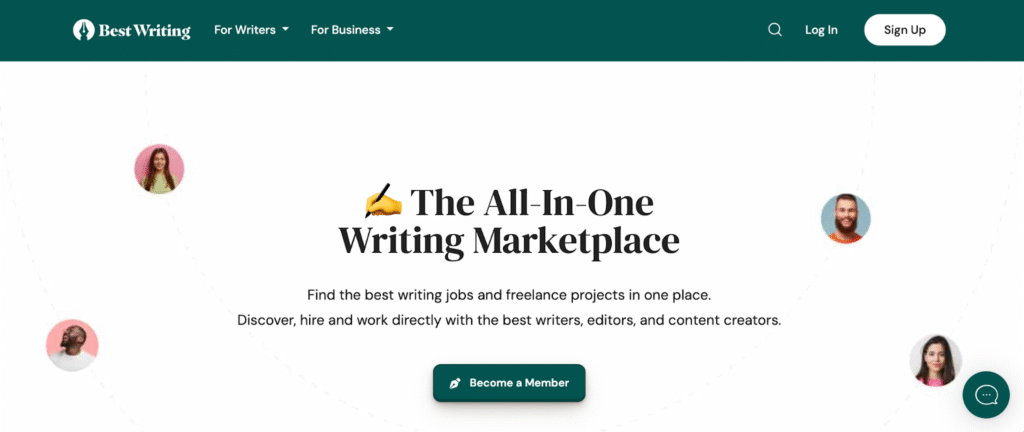
Looking for an evergreen website idea that will never go out of style? Job sites are a great, beginner-friendly website project that’s sure to bring in some major traffic.
Most job sites, though, are not very user-friendly and frustrate job hunters. A well-designed job site, however, has the potential to receive lots of website visitors and even generate some income.
Best Writing stands out as a great example. This website includes a minimalist website design that focuses on usability and the quality of its leads. It offers a seamless user experience and stellar user interface free from the clunkiness that bogs down so many other job boards.
Plus, unlike other job sites, Best Writing offers a search function to simplify the job search, giving users a quick way to find the specific type of job that they’re after.
Here’s where the revenue comes in: Best Writing also offers users the chance to sign up for a paid monthly membership that gives members advanced notice about new job postings. Additionally, the site also charges job posters a fee. Charging these fees allows the site to bring in revenue without relying on ads.
Related reads: How to build (and grow) a job board with Webflow
2. Affiliate site
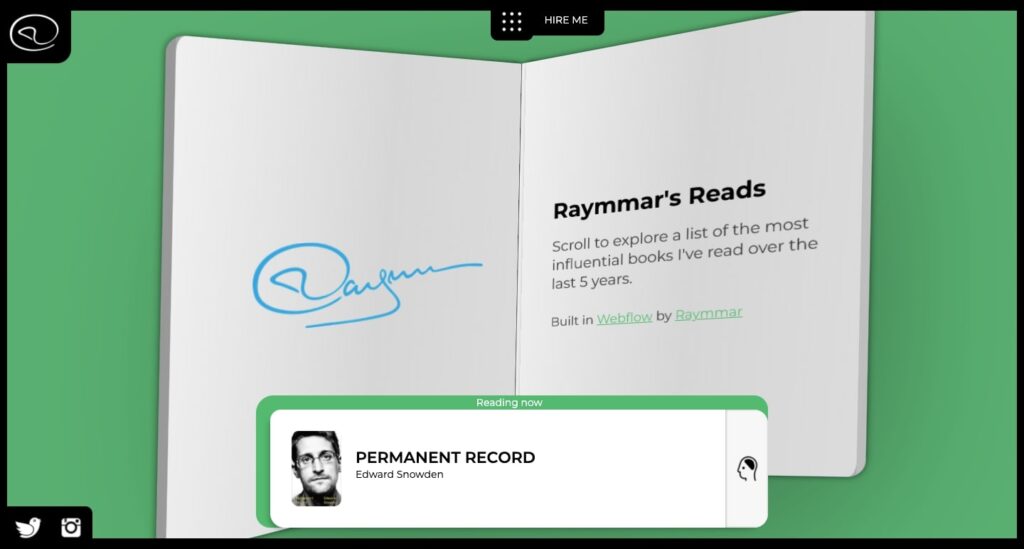
An affiliate website offers an online store of products and resources in a specific niche. Think of them as digital boutiques catering to the tastes and interests of a select demographic.
A great example of an affiliate site is Raymmar’s Reads — which functions as a digital book club where Raymmar shares books he likes and includes Amazon affiliate links. Raymmar uses 3D animations and color-shifting background transitions to make this simple site stand out.
Affiliate sites are a great way to bring in extra money, too — using Raymmar’s Reads for example, users can purchase products using his posted links. In return, the site owner receives part of the income from that purchase
3. Membership website
Membership websites are another great revenue-generating website idea. Members pay for a subscription in order to unlock premium content or tools that are not available anywhere else.
LinkedIn, the professional networking platform, offers a membership program called “LinkedIn Premium,” which provides enhanced features and tools for users who subscribe to the service.
With LinkedIn Premium, members gain access to advanced search filters to find and connect with professionals, see who’s viewed their profile, access personalized insights on job postings, and send InMail messages to contacts outside their network, among other benefits. LinkedIn Premium also offers different tiers of membership tailored to different needs, such as Premium Career, Premium Business, and Premium Sales Navigator, catering to individuals, businesses, and sales professionals, respectively.
This membership model allows LinkedIn to generate revenue by providing additional value to users who are willing to pay for enhanced features and tools beyond the basic free service.
If you’re looking for a great website idea to make money off of your content, building a membership website is a solid avenue
4. Online learning website

Quite a few platforms out there will host online courses for you. But they come at a price. Why not launch your own site and avoid having to pay someone for what you could do on your own with a website builder like Webflow?
Master the Handpan offers everything you need to learn how to play the handpan metal drum. The site includes three different levels of paid lessons — beginner, intermediate, and master class — plus a music theory course. Along with their instructional materials, Master the Handpan also has a buyer’s guide, discussion forum, and blog. There’s plenty of free content here to pique the interest of any aspiring handpan player.
If you’re offering an online course for a niche interest like the handpan, someone may find your website faster through a search engine than if it was part of a larger online course platform where it may get less visibility. If there’s not a lot of competition for what you’re teaching, being able to quickly attain a high level of SEO may be feasible if you create your own website.
If you want to have complete control over monetizing your online courses, launching a website of your own is the way to go.