
Fabric Hybrid AI
Backed by clinical
intelligence
By combining advanced conversational AI and physician-built clinical logic, Hybrid AI enables healthcare organizations to confidently adopt AI solutions that ensure seamless, safe, and effective patient experiences.
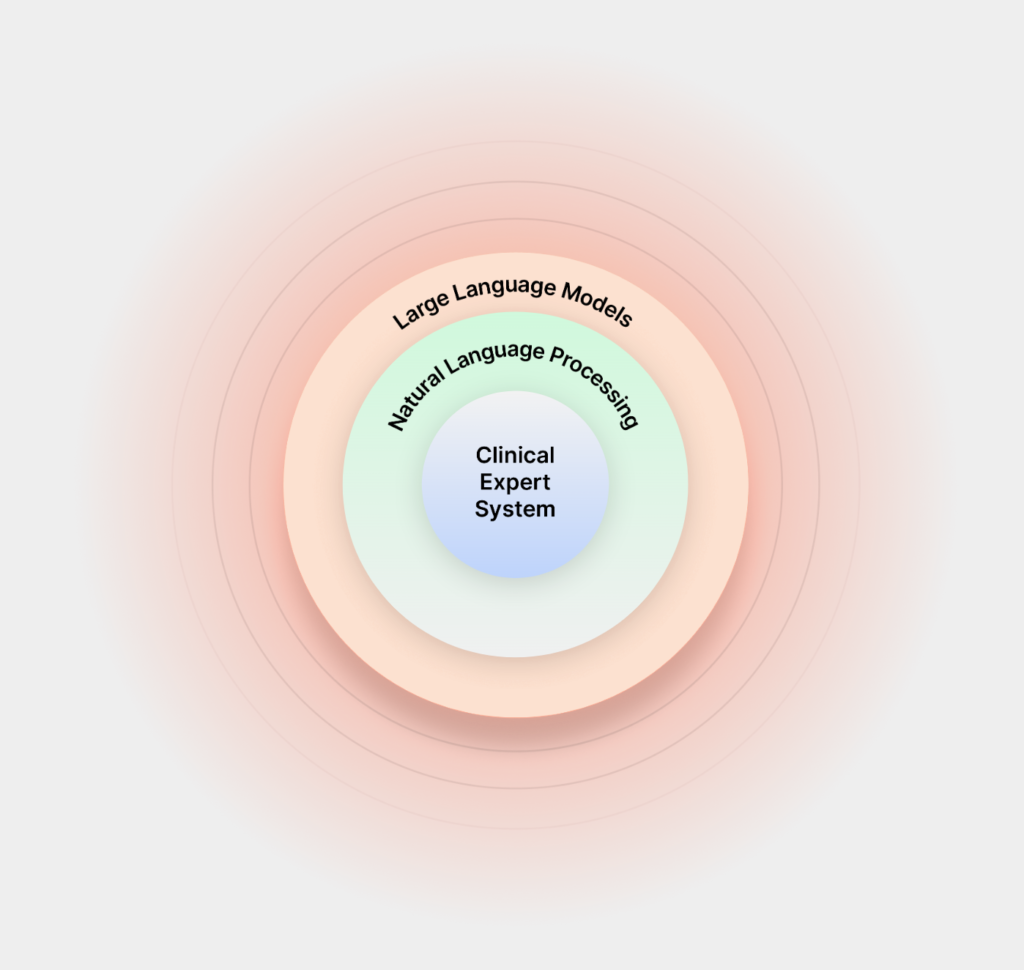
Deliver seamless experiences and faster, higher-quality care at the moment of need
For clinicians...
Move Faster
- With automated symptom collection, documentation, prescriptions, and lab orders.
Work smarter
- Thanks to readily available, evidence-based decision support.
Care better
- Optimize resource allocation and patient flow.

For consumers...
Start anywhere
Gain digital-first access to care wherever and whenever.
Know more
With simple step-by-step guides across the journey.
Stay connected
Through sleek experiences that keep them happy and coming back.

Case Studies
Create operational and clinical efficiency
while expanding access
How Fabric fit
Luminis Health
- “As one of the busiest Emergency Departments in the country, our staff immediately noticed the difference. Nurses are saving time and seeing patients faster, and patients appreciate the streamlined intake process and the digital transparency provided from the very beginning.”
- Fabric health refers to the overall condition and durability of fabrics, focusing on their longevity, cleanliness, and preservation. This can involve proper care techniques to maintain the integrity of fabrics used in clothing, upholstery, and other textile-based items.
- Key aspects of fabric health:
-
Regular cleaning: Fabrics need to be cleaned based on their material type to maintain their texture and color. Regular washing helps prevent dirt and oils from breaking down the fibers.
-
Proper storage: Storing fabrics correctly, such as hanging garments or folding linens properly, can help them maintain their shape and prevent degradation over time.
Saad Chaudhry
There are many reasons why you might feel stuck on a project. Perhaps your recent client is exceptionally vague about what they want and you’ve got no idea where to start. Or, perhaps, you feel burned out and uninspired after having worked non-stop for a long period of time. Or, maybe, you’ve been designing websites for the same type of clients with no opportunity to exercise your creative muscles. Whatever the reason is, feeling stuck is quite common when it’s your job to be creative. But, as long as you have a process to help you generate new web design ideas, you’ll be able to chip away at the roadblocks in front of you. In this article, we’re going to look at 10 things you can do to give your creativity a boost along with some resources you can bookmark for the next time you need it.
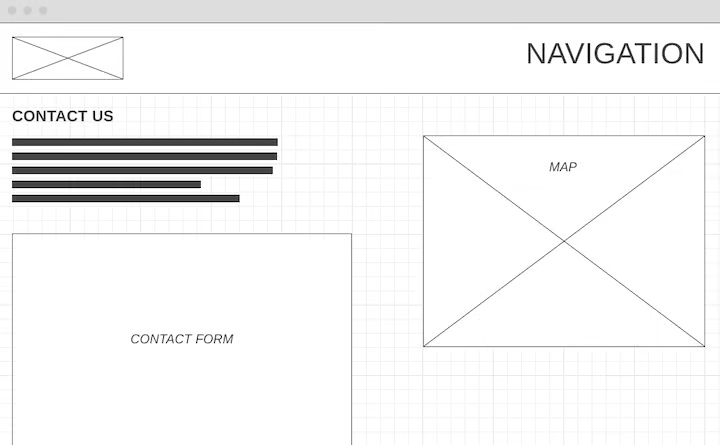
1.Switch From Desktop to Mobile
There’s something else you can try if you’re feeling restricted creatively by how much (or little) space you have to work with.
If you normally start designing from the desktop view, switch to a tablet or smartphone. Or if you’ve grown accustomed to starting with one of the smaller screens, scale up to desktop.
Experiment With Extremes
One reason you might be stuck on a particular website is that you haven’t found the perfect style for it. But rather than try to tweak the same idea you or your client started with, go to the extreme and see if that jogs something loose.
The opposite style might not be the exact solution needed, but it could inspire you to repurpose something that does work and apply it to what you have so far.
Here are some things you might experiment with:
Experiment With Extremes
One reason you might be stuck on a particular website is that you haven’t found the perfect style for it. But rather than try to tweak the same idea you or your client started with, go to the extreme and see if that jogs something loose.
The opposite style might not be the exact solution needed, but it could inspire you to repurpose something that does work and apply it to what you have so far.
Here are some things you might experiment with:
- One-page vs. multi-page site
- Photos vs. illustrations
- Retro vs. modern typography
- Text-only vs. image-heavy design
- Monochromatic vs. analogous color palette
- Animation vs. no animation