Shaheen Beauty Parlour

Discovering Shaheen Beauty Parlour: A Hidden Gem in Khajuri Khas, Delhi

Nestled in the bustling lanes of Khajuri Khas, a vibrant East Delhi neighborhood known for its lively community and everyday charm, lies Shaheen Beauty Parlour—a place where beauty meets affordability, expertise, and genuine care. In a city like Delhi, where high-end salons dominate headlines, local parlours like Shaheen offer something special: personalized service, cultural understanding, and that warm, neighborhood feel that makes every visit feel like catching up with friends.

Khajuri Khas itself is a dynamic area in North East Delhi, close to landmarks like Karawal Nagar and accessible via metro lines. It’s a mix of residential pockets, street markets, and small businesses, where residents value trusted local spots over flashy chains. Amid the daily hustle—rickshaws zipping by, vendors calling out, and families going about their routines—Shaheen Beauty Parlour stands out as a serene oasis dedicated to enhancing natural beauty.

Our Signature Bridal Services – Make Your Big Day Unforgettable

Your wedding day is once-in-a-lifetime, and we treat it that way. Our expert bridal artists specialize in timeless Indian bridal makeup and hairstyles that complement every skin tone, outfit, and emotion. From soft romantic looks to bold glamorous styles, we use long-wear, sweat-proof products from MAC, Huda Beauty, Kryolan, and HD ranges.

Services include:

  • Full bridal makeup + hair trial sessions
  • Airbrush makeup for flawless camera-ready finish
  • Intricate updos, braids, and bun styles with fresh flowers or jewelry integration
  • Pre-bridal packages (skin brightening, de-tan, hair spa)

Many brides tell us their look lasted through mehndi, sangeet, and reception without touch-ups — that’s the Shaheen promise!

Hair Transformations – Healthy, Trendy, and Stunning

Hair is our passion! Our stylists stay ahead of global trends while prioritizing hair health. Services include:

  • Precision cuts, layers, and fringe styles
  • Global hair coloring: balayage, highlights, ombre, fashion shades
  • Keratin smoothening, Brazilian blowout, and protein treatments for frizz-free, silky results
  • Hair extensions, rebonding, and scalp therapies

Whether you want glossy straight locks or voluminous curls, we deliver results that look natural and feel amazing.


Rejuvenating Facials & Advanced Skin Care

Glow from within with our customized facials using dermatologist-approved brands like Dermalogica, O3+, Lotus Herbals, and more. Popular treatments:

  • Hydra facial for deep hydration and pore cleansing
  • Gold therapy and diamond glow for instant radiance
  • Anti-aging, acne control, pigmentation, and de-tan packages
  • Relaxing massages with essential oils

Clients often leave with skin that’s brighter, smoother, and visibly healthier — perfect before events or as regular maintenance.


Sh5
Sh6

Our Plan

Short-Term Plan (12–18 Months)

  • Strengthen our core services with consistent high-quality delivery in all major categories:
    • Bridal & Party Makeup
    • Hair Styling & Treatments (Keratin, Smoothening, Coloring, Extensions)
    • Facials & Advanced Skin Treatments (HydraFacial, Glow, Anti-Pigmentation)
    • Threading, Waxing & Full Body Care
    • Nail Art & Extensions
    • Mehndi & Hair Spa
  • Introduce branded & imported products only (no compromise on quality)
  • Build a loyal customer base through excellent service, hygiene, and personalized attention
  • Achieve 4.8+ average rating across Google, Facebook & Instagram
  • Grow our repeat clientele to 65%+ of total bookings
  • Launch appointment-only system with online booking (WhatsApp / Instagram / website) to reduce waiting time and improve experience
  • Train & certify all staff every 6 months on latest trends & techniques

Medium-Term Plan (2–3 Years)

    • Expand premium services:
      • Lash Lift & Extensions
      • Microblading & Permanent Makeup
      • Skin Booster & BB Glow Treatments
      • Luxury Bridal Packages with home service option
    • Open 2nd branch in a high-demand nearby area (exact location based on customer feedback & footfall data)
    • Start Shaheen Beauty Academy – short professional courses (3–6 months) for aspiring beauticians with 100% job placement assistance
    • Create signature treatment packages named after our brand (e.g., “Shaheen Glow Facial”, “Shaheen Bridal Radiance”)
    • Build strong digital presence:
      • 50,000+ Instagram followers
      • Regular before-after reels & client testimonials
      • Monthly live sessions on makeup/skin tips

Contact Us

Our Location

How To Learn AI In 2026

How to Learn AI in 2026 (Realistic Roadmap for Beginners to Job-Ready)

Artificial Intelligence isn’t “the future” anymore — in 2026, it’s the present. From agentic workflows and multimodal models to AI agents that use tools autonomously, the field moves incredibly fast.

The good news? You don’t need a PhD or years of math to get started. The bad news? Watching endless YouTube videos or doing toy exercises won’t cut it anymore. Employers want people who can build, deploy, and iterate on real systems.

This 2026 roadmap shows you how to go from zero to AI practitioner (or even junior AI engineer) in 6–12 months with focused, hands-on effort. Let’s break it down.

Phase 0: Mindset & Prerequisites (1–4 weeks) Before code, build the right habits:

  • Consistency over intensity — 1–2 hours daily beats 10-hour weekend marathons.
  • Learn by shipping — Every month, aim to have something live (Hugging Face Space, Streamlit app, GitHub repo).
  • Skip perfectionism — Messy first versions are better than perfect unfinished ones.

Must-have foundations (don’t overdo theory yet):

  • Python: Variables, loops, functions, classes/OOP, libraries (requests, json). Resources: Automate the Boring Stuff (free), Kaggle Python course.
  • Basic tools: Git/GitHub, VS Code + Jupyter, command line basics.
  • Math only as needed: Learn linear algebra/probability/stats while doing projects, not in isolation.

Phase 1: AI Literacy + Prompt Engineering (4–8 weeks)

Goal: Become fluent with frontier models and understand what AI can/can’t do in 2026.

Key topics:

  • How transformers/LLMs actually work (attention, tokens, context window).
  • Prompt engineering (chain-of-thought, few-shot, role-playing, tool use).
  • Multimodal inputs (text + image + audio).
  • Popular models: Claude 3.5/4, GPT-4o/o1, Gemini 2, Grok-2/3, Llama 3.3+, Qwen 2.5.

Practice daily:

  • Use free tiers of ChatGPT, Claude, Perplexity, Gemini.
  • Build 5–10 mini-apps: resume optimizer, tweet generator, recipe improver using prompts + APIs.

Resources:

  • “AI for Everyone” (Coursera – Andrew Ng)
  • Learn Prompting (learnprompting.org – free)
  • Anthropic / OpenAI prompt engineering guides

If you want to learn ofline

Phase 2: Classic ML + Data Skills (8–12 weeks)

Goal: Understand the “why” behind models and handle real data.

Core skills:

  • NumPy, Pandas, Matplotlib/Seaborn
  • Scikit-learn (classification, regression, clustering, pipelines)
  • Evaluation metrics, cross-validation, overfitting
  • Basic feature engineering + EDA

Projects:

  • Predict house prices (Kaggle)
  • Titanic survival (classic but still great)
  • Customer churn prediction (real dataset)

Resources:

  • Kaggle Learn (free micro-courses)
  • “Hands-On Machine Learning with Scikit-Learn, Keras & TensorFlow” (book – 3rd ed.)
  • fast.ai Practical Deep Learning (Part 1 – still excellent in 2026)

Phase 3: Deep Learning & Modern AI Stack (12–20 weeks)

This is where 2026 shines — focus on what’s actually used.

Key areas:

  • PyTorch (preferred over TensorFlow in most cutting-edge work)
  • Hugging Face Transformers (pre-trained models, tokenizers, pipelines)
  • Fine-tuning LLMs efficiently (LoRA, QLoRA, PEFT)
  • RAG (Retrieval-Augmented Generation) basics
  • Vector databases (Chroma, Pinecone free tier, FAISS)
  • Agents & tool use (LangChain / LlamaIndex light versions)

Must-do projects:

  • Fine-tune Llama-3.2 or Mistral on your own dataset (e.g., custom chatbot)
  • Build RAG Q&A over PDFs (company docs, research papers)
  • Simple AI agent that uses tools (search + calculator + email draft)
  • Multimodal: image captioning or visual question answering

Resources:

  • Hugging Face NLP Course (free)
  • DeepLearning.AI short courses (fine-tuning, RAG, agents)
  • PyTorch official tutorials
  • “Transformers for Natural Language Processing” (book – 2nd ed.)

How to Become a Python Developer in 2026

Why Python in 2026 Is Still the Smartest Choice

Python isn’t going anywhere in 2026 — it’s actually stronger than ever. With AI/ML, automation, web development, data engineering, cybersecurity, and even quantum computing prototyping, Python remains the #1 entry-level and high-salary language.

In 2026, companies expect junior developers to:

  • Write clean, efficient code
  • Understand AI tools (GitHub Copilot, Cursor, Claude, etc.)
  • Build real projects fast
  • Know at least one hot domain (FastAPI + React / Data / Automation)

The good news? You can go from zero to hirable in 6–12 months with the right roadmap.

Here’s your realistic 2026 battle plan.

Step 1: Master Python Fundamentals (1–2 Months)

Forget “learn everything” tutorials. Focus only on what 90% of jobs require:

  • Variables, data types, strings
  • Lists, tuples, sets, dictionaries (+ comprehensions)
  • Control flow (if, loops, match-case)
  • Functions, lambda, *args/**kwargs
  • OOP: classes, inheritance, dataclasses, protocols
  • Error handling & debugging
  • File I/O, context managers
  • Modules & packages

Best free/modern resources in 2026:

  • Python.org official tutorial (still gold)
  • “Automate the Boring Stuff with Python” (free online)
  • CS50’s Introduction to Programming with Python (Harvard – free)
  • Python – Full Course for Beginners (updated 2025/2026 versions on YouTube)

Pro tip: Use dark theme from day one — your eyes will thank you after 8-hour coding sessions.

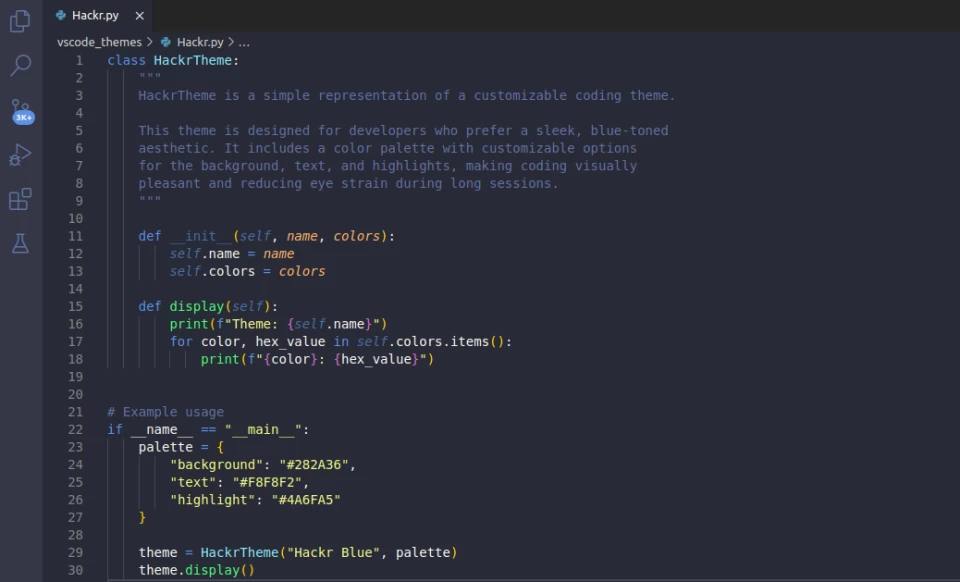
Here’s a beautiful dark-mode Python code example to motivate you:

Step2:Master Core Concept

Once basics are clear, move to:

  • Object-Oriented Programming (OOP)

  • File Handling

  • Exception Handling

  • Modules & Packages

  • Virtual Environments

These are essential for real-world projects.

Here are more options to learn Core concept

Online

If you Want to learn online here is an option

Offline

If you want to learn ofline here is an option

Step3:Choose a Career Path

Python is huge — pick a direction:

  • 🌐 Web Development → Django, Flask

  • 📊 Data Science → Pandas, NumPy, Matplotlib

  • 🤖 AI / Machine Learning → TensorFlow, PyTorch

  • ⚙️ Automation / Scripting → Selenium, OS, Requests

You don’t need to learn everything — specialize.

Step4:Build Real Projects

Projects prove your skills more than certificates:

  • To-Do App

  • Web Scraper

  • Portfolio Website

  • Data Analysis Dashboard

  • Automation Scripts

📌 Push your projects to GitHub.

Cyber Security

Cybersecurity in 2026

What is cyber Security

Cybersecurity is the practice of protecting computer systems, networks, programs, and data from digital attacks, damage, or unauthorized access, aiming to ensure confidentiality, integrity, and availability (the CIA Triad) of information by using technology, processes, and policies to defend against threats like malware, phishing, and ransomware. It involves securing everything from personal devices to critical infrastructure, making it vital for businesses, governments, and individuals in our increasingly digital world

Key Aspects of Cybersecurity
    • Network security: Protecting networks from intruders.
    • ApplicationSecurity: Keeping software and devices secure from threats.
    • Information Security
       Protecting data privacy and integrity
  • Operational Security: Securing data handling processes and decisions.
  • Cloud Security: Securing cloud environments and data.
  • Disaster Recovery Planning for response and recovery from attacks. 
Common Threats
  • Malware: Malicious software like viruses, worms, and ransomware.
  • Phishing: Deceptive attempts to trick users into revealing sensitive info.
  • DDos Attack: Overwhelming systems with traffic to make them unavailable.
  • Social Engineering: Manipulating people into performing actions or divulging confidential info. 
  • Why It’s Important
 
  • Protects sensitive data: From financial details to personal identity.
  • Ensures business continuity: Prevents operational disruption.
  • Maintains trust: Essential for customer confidence in digital services.
  • Secures critical infrastructure: Protects essential services like power grids and water systems


Importance Of Cyber Security

Cybersecurity is crucial as it significantly impacts both individuals and organizations across various sectors. Some of the main reasons why it is so important are listed below.

  • Protection of sensitivity Data

Cybersecurity is imperative for protecting sensitive data such as personal details, health records, financial information, and intellectual property. Without strong cybersecurity measures, organizations and individuals are vulnerable to data breaches that could lead to identity theft or financial fraud. For instance, if a hospital’s database is breached, it could result in unauthorized access to patient information, such as medical histories, and personal identification details. This can lead to identity theft and privacy violations, and damage the trust between patients and the hospital.

  • Business Coutinuity and Reputatuon

For businesses, cybersecurity protection helps ensure operational continuity and protects their reputation. Cyberattacks can cause substantial disruptions, resulting in financial losses, operational downtime, and reputational damage. A well-known incident involves Target. There was a data breach in the company which led to massive financial losses and eroded customer loyalty. In the breach, hackers accessed 40 million debit and credit card records, along with 70 million other customer records. Target had to pay an $18.5 million settlement, but more than that, it had a detrimental long-term impact on the business’s success.

  • Economic and Regulatory Implications

Ignoring cybersecurity can have severe economic repercussions. Businesses may face financial losses due to theft, the cost of system repairs, and compensation for affected parties. In addition, failure to protect sensitive data can also attract regulatory fines under laws like the General Data Protection Regulation (GDPR) in Europe or the Health Insurance Portability and Accountability Act (HIPAA) in the United States.

  • National Security and Critical Infrastructure

Cybersecurity has become extremely important for national security. The reason for this is that cyberattacks can target essential services like water systems, power grids, and government agencies—all important assets. An example of an attack of this kind was the Stuxnet attack, which targeted nuclear facilities. Such incidents underscore the importance of protecting critical infrastructure to prevent potential catastrophes.

How To learn Cyber Security

To learn cybersecurity, you should follow a structured approach that includes building foundational knowledge, gaining hands-on experience through practical labs and certifications, and choosing a specialization. This field is diverse, so focusing your efforts is key.

Foundational Knowledge
Before diving into advanced security topics, you need a strong understanding of the systems you will be protecting. 
    • Networking Fundamentals: Learn how data travels from one computer to another. Key topics include TCP/IP, firewalls, VPNs, routing, and switching.
    • Operating Systems: Become an expert in Windows and Linux, understanding their architecture, file systems, and security principles.
    • Programming/Scripting
      : While not strictly required for all entry-level roles, basic coding skills in languages like Python, JavaScript, or C can help you write security scripts, perform malware analysis, and identify vulnerabilities
      .
  • Web Services: Understand HTTP, HTML, and web application architecture to identify and protect against common attacks like SQL injection and cross-site scripting (XSS). 

Practical Experience & Training

Hands-on application of knowledge is crucial for a career in cybersecurity.
  • Interactive Learning Platforms: Use interactive platforms that provide simulated environments and guided challenges to practice your skills.
    • TryHackMe and Hack The Box (HTB) Academy offer labs for various skill levels.
    • EC-Council provides free courses on topics like cloud computing, ethical hacking essentials, and digital forensics.
  • Capture The Flag (CTF) Challenges: Participate in CTF competitions and use platforms like Vulnhub to test your skills in real-world scenarios.
  • Build Your Own Lab: Set up a home lab using virtual machines (VMs) to practice securing different operating systems and network configurations. 

There are many Places To Practical Experience & Training

Contact Us

Digital-Marcketing

Welcome to Digital Marketing for Beginners

In this digital era, having a solid online presence is absolutely crucial for any organization, including nonprofits. Digital marketing offers various opportunities for nonprofits to raise awareness, engage with supporters, and achieve their missions more effectively.

Let’s dive into why nonprofits need digital marketing:

In today’s interconnected world, going digital allows nonprofits to extend their reach beyond their local communities. You can connect with supporters, donors, and volunteers from around the globe, going beyond geographical barriers to reach a wider audience.

Another great thing about digital marketing is that it is cost-effective. Most nonprofits usually have a limited budget, and digital marketing provides various channels—like social media promotion, email marketing, and content creation—that will not drain your resources.

Most importantly, digital marketing enables nonprofits to effectively engage and build solid relationships with donors. You can keep your supporters informed, involved, and motivated to contribute to your cause through social media platforms, email newsletters, and personalized content. The key is creating and maintaining meaningful connections!

So how can you leverage the power of digital marketing? Let’s take a closer look at its key components

Website Optimization: Your nonprofit website should be user-friendly and visually appealing, acting as the central information hub of your organization, mission, and initiatives. Most importantly, it should be optimized for search engines (SEO) so that visitors can easily find your organization in their search.

How learn digital marcketing

There are two way

Online

If you want to learn online chlick ↓

Ofline

If you want to learn ofline chlick ↓

Top Digital Marketing Trends for 2026

Here are the most impactful trends based on insights from industry leaders and recent reports:

1.AI Become the Core of Marketing Operations

AI is no longer experimental—it’s the foundation. From personalization to automation, AI agents are handling workflows, predictive analytics, and even creative tasks like video ad production.

  • Generative AI will create around 40% of video ads.
  • AI-driven personalization under privacy constraints is key.
  • Agentic AI (autonomous agents) will optimize campaigns in real-time.
D4
D5

2.Serch Evolves: From SEO to AEO and Generative Engine Optimization

Traditional SEO is shifting to Answer Engine Optimization (AEO) and optimization for AI-powered search (e.g., ChatGPT, Perplexity).

  • Focus on conversational search and zero-click results.
  • Blogging with human-lived experiences is making a comeback for credibility.

3.Authenticity and Human Touch Win Over AI-Generated Content

With AI flooding channels, consumers crave real stories, real people, and genuine interactions.

  • Short-form video remains dominant.
  • Internal influencers (employees) and user-generated content build trust.
  • Sensory, tactile creative trends emphasize human elements.

4.Social Commerce and Immersive Experiences Explode

Social platforms are becoming full-fledged shopping destinations.

  • Rise of retail media networks (RMNs) and in-app checkouts.
  • Immersive tech like AR/VR and gamification for engaging experiences.

5.Privacy Stricter and First-Party Data

Stricter regulations demand trust-based data collection.

  • Zero- and first-party data become competitive advantages.
  • Omnichannel approaches with compliant personalization.

Other notable trends include programmatic advertising dominance, community building with creators, and embedding distribution directly into products for network effects.

Why These Trends Matter for Your Business

Adopting these trends isn’t optional—it’s necessary for growth. Brands that integrate AI thoughtfully, prioritize authenticity, and optimize for new search behaviors will see higher engagement, better ROI, and stronger customer loyalty.

Final Thoughts

2026 is the year digital marketing becomes more integrated, intelligent, and human-centered. Stay ahead by experimenting with AI tools, focusing on genuine content, and listening to your audience.

What trend are you most excited about for 2026? Share in the comments below!


E-Commerce

E-Commerce Business for Beginners

How to Start an E-Commerce Business for Beginners in 2026

Scroll Down

Starting an e-commerce business is one of the most accessible ways to become an entrepreneur today. With global online sales projected to reach nearly $8 trillion by 2027, there’s huge potential for beginners. You don’t need a physical store, massive inventory, or even coding skills. In this guide, we’ll walk you through the process step by step, focusing on using Hostinger for hosting, WordPress with WooCommerce for your store, and Elementor for beautiful, custom designs—no experience required!

Why Start an E-Commerce Business in 2026?

  • Massive Growth: E-commerce now accounts for over 21% of global retail sales, with billions of online shoppers worldwide.
  • Low Startup Costs: You can launch with under $1,000 using dropshipping or print-on-demand models.
  • Key Trends to Leverage:
    • AI-powered personalization and shopping agents.
    • Social commerce (e.g., TikTok Shop, Instagram Shopping).
    • Augmented Reality (AR) for virtual try-ons.
    • Sustainability and transparent supply chains.
    • Voice commerce and mobile-first experiences

Step 1: Find Your Niche and Products

Start by identifying a profitable niche. Look for products with demand but low competition.

  • Research Ideas: Use tools like Google Trends, Amazon Best Sellers, or TikTok for trending items (e.g., eco-friendly products, health gadgets).
  • Business Models:
    • Dropshipping: No inventory—suppliers ship directly.
    • Print-on-Demand: Custom apparel or merch.
    • Private Label: Brand your own products.
    • Digital Products: E-books, courses (high margins, no shipping).

Validate your idea by surveying potential customers or running small ads.

Step 2: Create a Business Plan

Outline your goals, target audience, competitors, and finances.

  • Key Elements:
    • Executive summary.
    • Market analysis.
    • Marketing strategy.
    • Financial projections (startup costs: $100–$5,000 typically).

A solid plan helps secure funding if needed and keeps you focused.

Step 3: Register Your Business and Handle Legal Basics

Don’t skip this—operating legally protects you.

  • Choose a Structure: Sole proprietorship (simple) or LLC (better liability protection).
  • Register: Get a business name, EIN (free from IRS), and any required licenses.
  • Sales Tax: Register for permits; use tools to automate collection (nexus rules apply if you hit sales thresholds in states).
  • Privacy & Compliance: Include privacy policy, terms of service. Comply with GDPR (EU) or CCPA (California) if applicable.
  • Payments: Ensure PCI compliance for secure transactions.

Consult a lawyer or use services like LegalZoom for specifics.

Step4 : Choose Your Business Location

Choose your business location from google map and register it on google map 

Step:5 How to listing our product on Amazon

To sell on Amazon, you need a registered Seller Central account (Individual or Professional plan). Once set up, listing products is done through Seller Central. There are two main scenarios: matching an existing product in Amazon’s catalog (common for reselling) or creating a new listing (for unique/private label products).

Prerequisites Before Listing

  • Have product details ready: Title, description, high-quality images (main image on white background, at least 1000×1000 pixels), bullet points, keywords, price, quantity, and product identifiers (UPC, EAN, ISBN, or GTIN if applicable).
  • For new products, you may need Brand Registry for full control (optional but recommended for private label).
  • Check if your category is restricted/gated (e.g., beauty, groceries) — some require approval.
  • Decide fulfillment: Fulfillment by Amazon (FBA) or Fulfillment by Merchant (FBM).

Leadership

Type of Leadership

Leadership is often contrasted with management: Management focuses on planning, organizing, and controlling resources for efficiency, 

Leadership

Leadership is a multifaceted concept that has been defined in numerous ways across dictionaries, scholarly research, business contexts, and philosophical perspectives. There is no single universal definition, but common themes emerge: it involves influence, inspiring or guiding others, and achieving shared goals or collective results, often distinguishing it from mere management or authority.

Farjan

Lorem ipsum dolor sit amet, consectetur adipiscing elit. Ut elit tellus, luctus nec ullamcorper mattis, pulvinar dapibus leo.

Farjan Khan